
Engineering Intention into Every Interaction.
Gametory is not a mobile game developer. We are a studio crafting tactile, narrative-first experiences for the device in your hand. Our mission is to merge technical precision with artistic vision, creating games that feel like living art—where every pixel, sound, and haptic pulse serves the story.
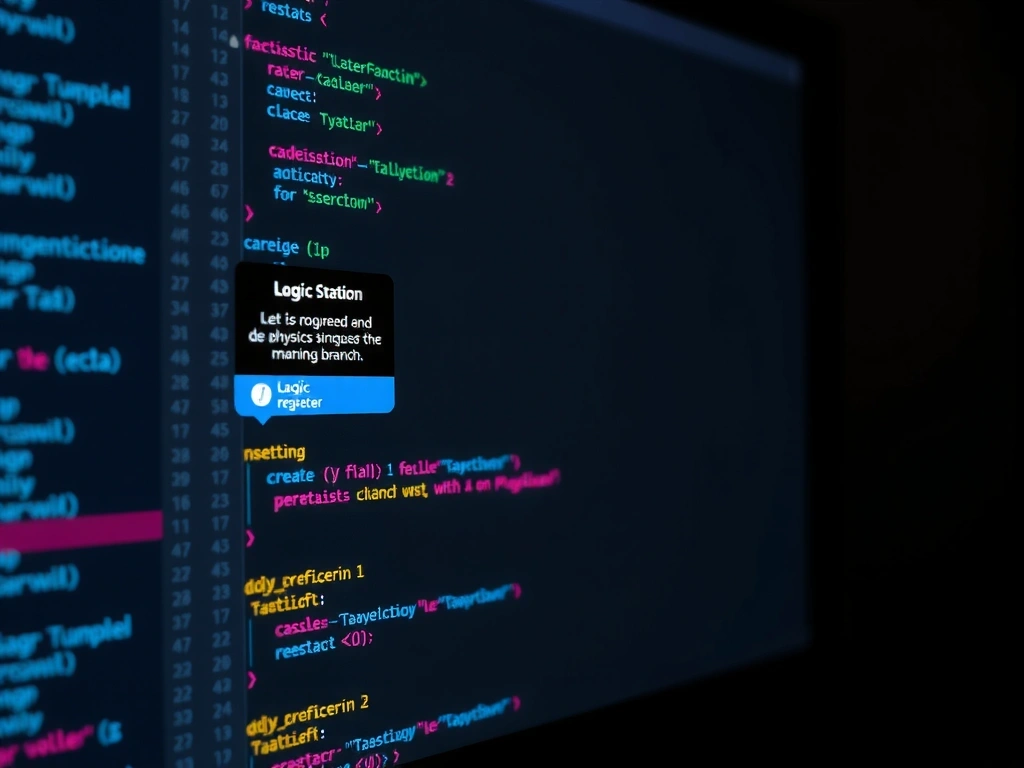
A real node from our Asymmetric project, mapping player input to haptic feedback. The "Latency Gate" node ensures tactile response stays below 8ms.
The Philosophy: Immersion is Not an Illusion
Our guiding principle is that true immersion on a mobile device is achieved through the convergence of distinct sensory channels—visual, auditory, and tactile. We reject the common industry approach of treating graphics as the primary driver. Instead, we operate on a constraint: the device is limited, so our creativity must be precise.
This leads to a specific methodology. We build a "Sensory Blueprint" from day one, a living document that tracks every intended player feeling. Is the surface supposed to feel slick, gritty, or yielding? We prototype that sensation before drawing the first texture. This blueprint becomes our contract between the artist, the programmer, and the designer.
How We Define "Good" Haptics
- • Latency: Measured end-to-end (input to vibration) using platform profilers. Target is sub-10ms. We cannot control OS-level delays, so we minimize every other step.
- • Fidelity: We test across the widest range of supported devices (from iPhone SE to flagship Androids). A pattern that feels rich on a high-end phone must not feel chaotic on a budget device.
- • Narrative Alignment: Does the haptic feel match the visual? A "metal clank" vibration for a wooden door is a failure, regardless of technical performance.
From the Bench: Common Studio Pitfalls
After a decade of shipping mobile titles, we've cataloged the subtle failures that undermine great design. These are not technical bugs; they are philosophical missteps that happen early and propagate through the entire pipeline.
The "Silent Vibration" Trap
Mistake: Using generic haptic feedback (e.g., default "click" from engine) for every interaction. It becomes visual noise the player ignores.
Our Fix:We create a "haptic vocabulary": soft pulses for UI, sharp jolts for combat, sustained rumbles for environmental ambiance. Each has a narrative purpose.
Viewport Tunnel Vision
Mistake: Designing for a single device size (often the latest flagship). This breaks the experience on smaller screens or tablets.
Our Fix:We use a "canvas-first" workflow. The interactive frame is defined by aspect ratio, not pixel count. UI elements are anchored to logical zones, not fixed coordinates.
The Polish Paradox
Mistake: Applying visual polish too late in development. Changes later become exponentially costly and often break the core feel.
Our Fix:"Grey-box beauty." Even our earliest prototypes use intentional lighting and placeholder FX to test mood and readability. Art is an iterative dialogue with code.
Battery as an Afterthought
Mistake: Optimizing performance only for frame rate, not power consumption. A smooth but device-melting game is a failed product.
Our Fix:We profile power draw alongside FPS. We implement dynamic LOD for art and audio streaming, and we consider sensor usage (GPS, gyro) as a key performance budget item.
The Takeaway: Constraint is the Canvas
We believe the limits of mobile hardware are not a barrier, but a creative framework. By embracing the constraint of the device—we are forced to make every decision intentional. The result is not a scaled-down console game, but a native mobile experience that stands on its own merit: deeply tactile, visually striking, and designed for the human hand.
Have a project that demands this level of intention? We're listening.
Start a Conversationul. Nowy Świat 1, 00-001 Warszawa, Poland
+48 22 123 45 67 · info@gametory.pro
Behind the Sound: Studio Tone Listen
A raw, unedited 30-second loop from our foley library, demonstrating the tactile texture of a "crystalline" environment. Note the layered, non-harmonic frequencies designed to feel unsettling without being loud.